
Under the guise of “cutting unnecessary red tape”, the European Commission proposed profound changes to the Union’s regulatory framework for the protection of personal data.
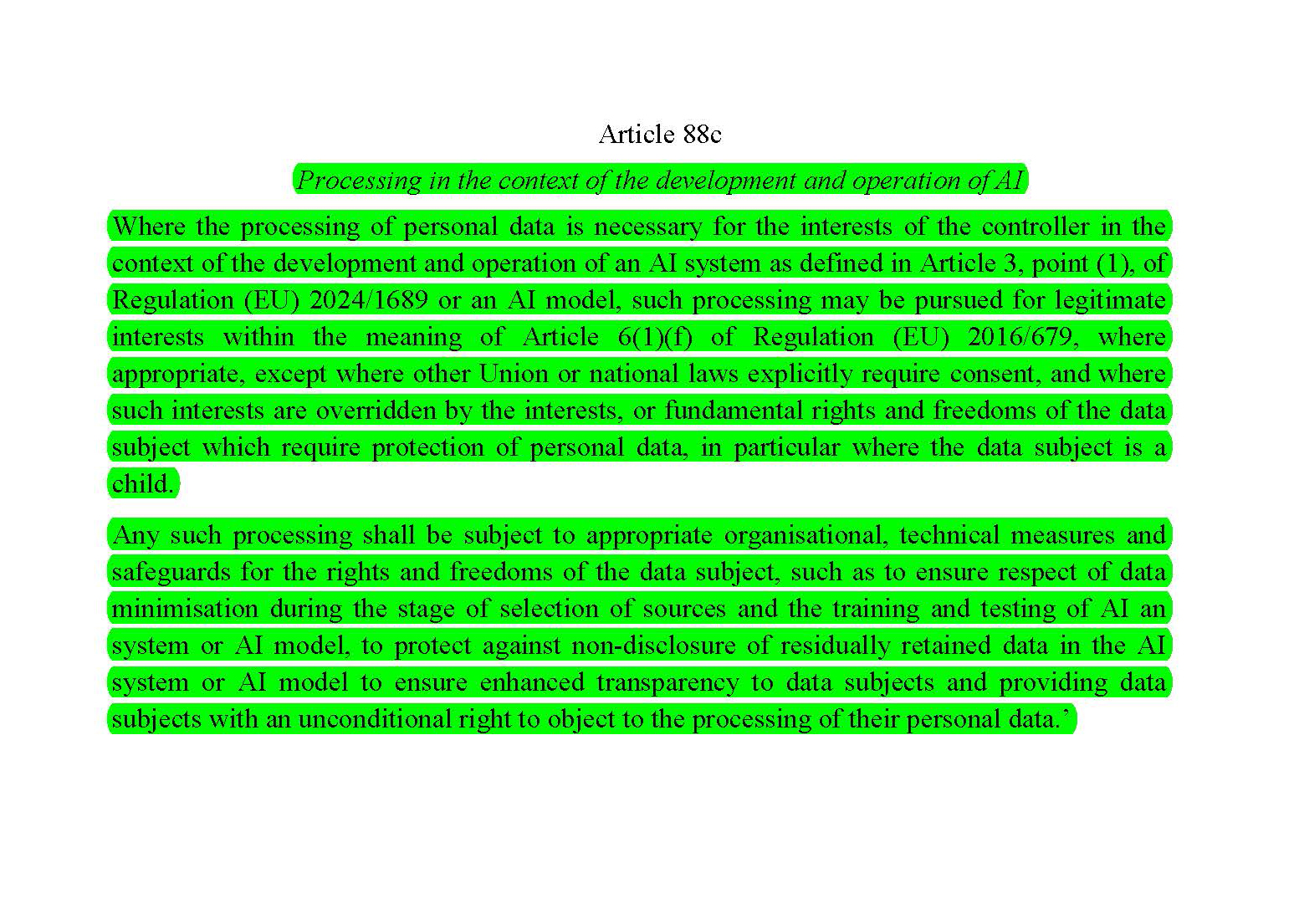
o foster the development and deployment of generative models, the Commission’s so-called “Digital Omnibus” package seeks to facilitate building such models on personal data without prior consent by recognising a company’s “legitimate interest” in doing so. Those changes are based on a fundamental misunderstanding of the regulatory framework and the technology itself. The Commission’s proposal fails to account for well-established requirements and guardrails for the use of personal data without consent (or another justification).
Even worse, the package conveniently ignores that the development and deployment of generative models extensively and irrevocably interfere with people’s privacy. If enacted, the Commission’s proposal will severely impact everyone’s digital privacy. Companies have previously falsely claimed a “legitimate interest” in harvesting data on every aspect of our human existence. For them, the proposed changes will serve as an excuse to proceed without anyone’s permission. The purpose of the exploitative use of personal data may have changed, from personalised advertising to building generative models, but the effects will be the same. People will have to shoulder the burden of protecting their own digital privacy with little help from the remaining regulatory framework.
Moderation by: Valie Messini