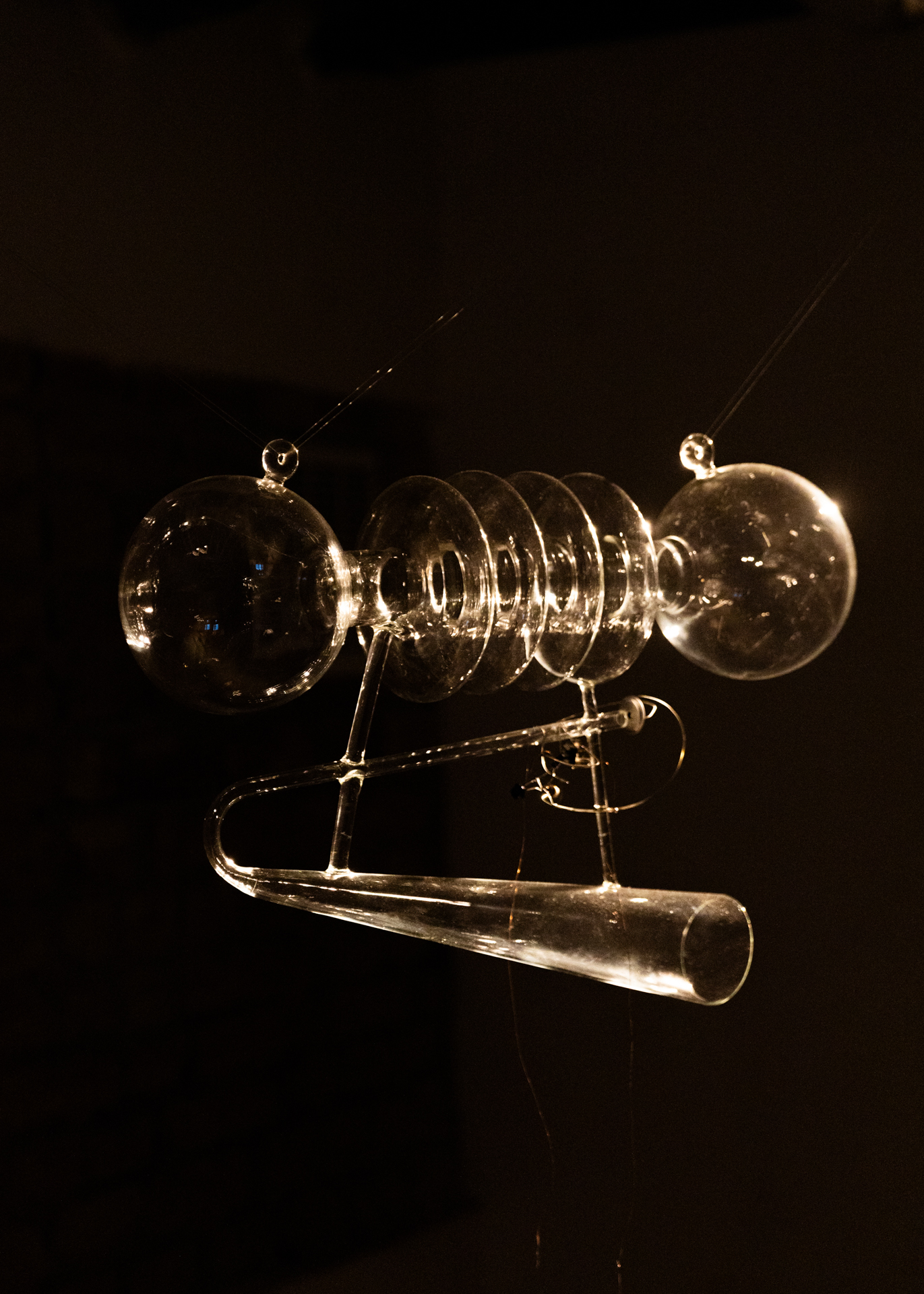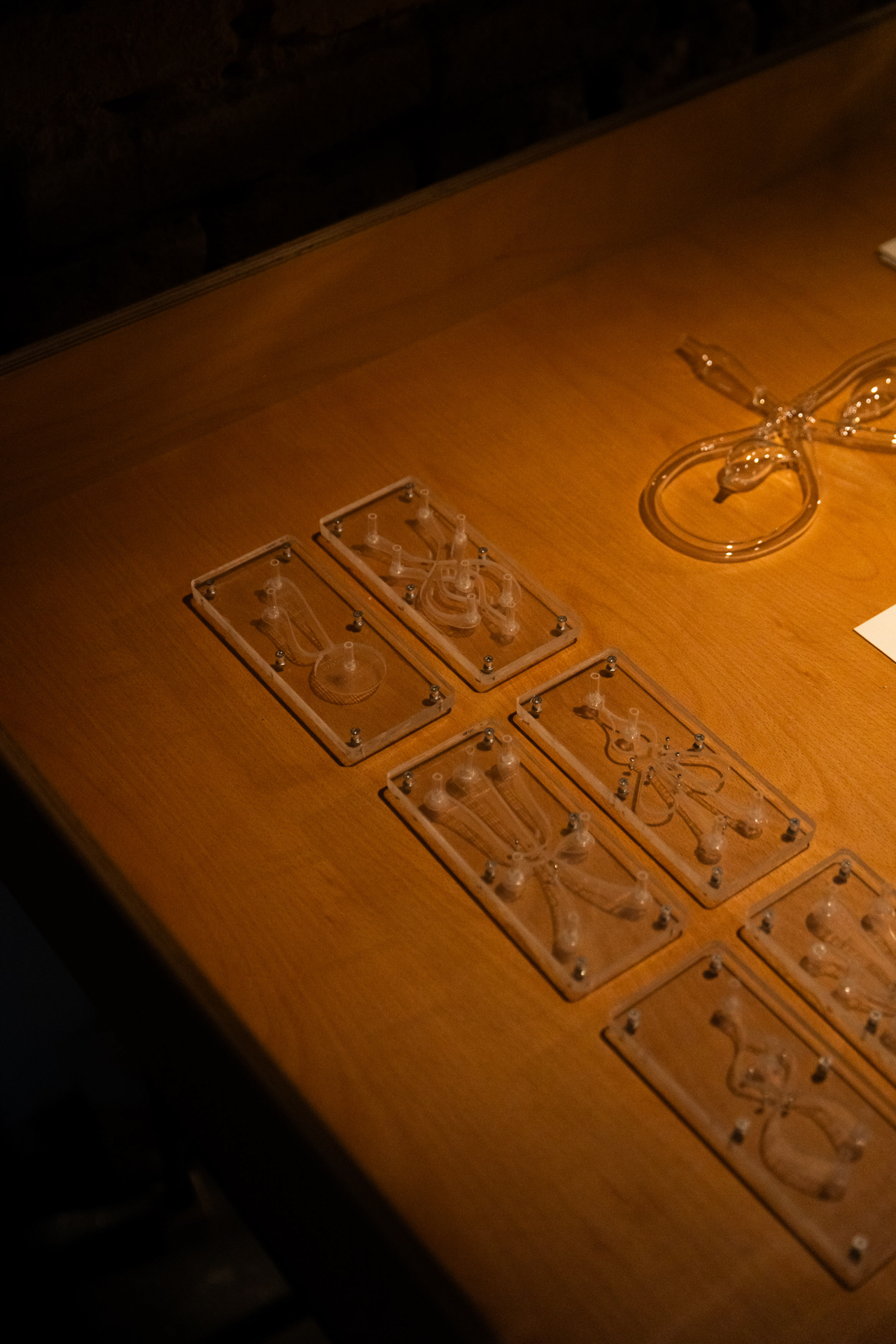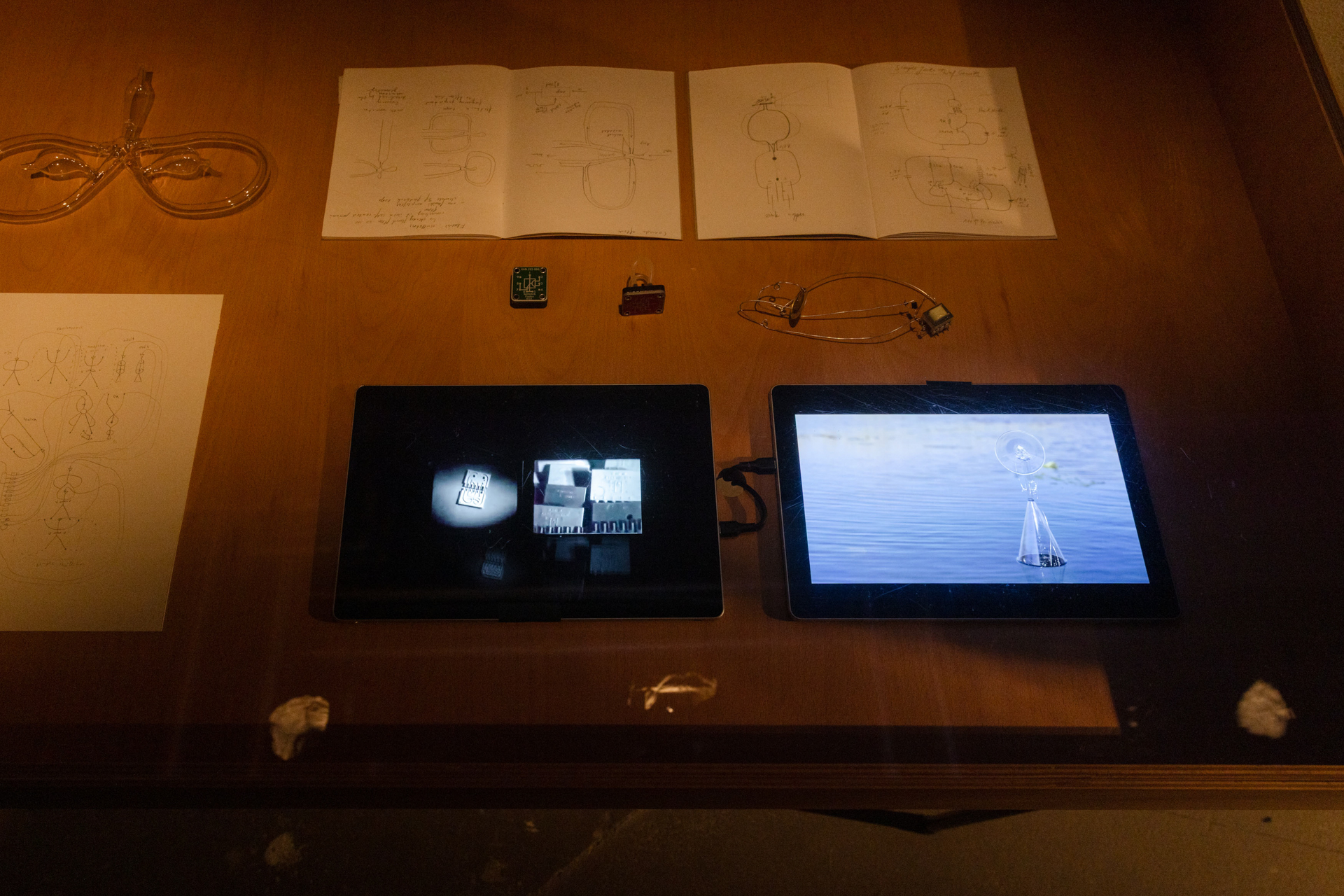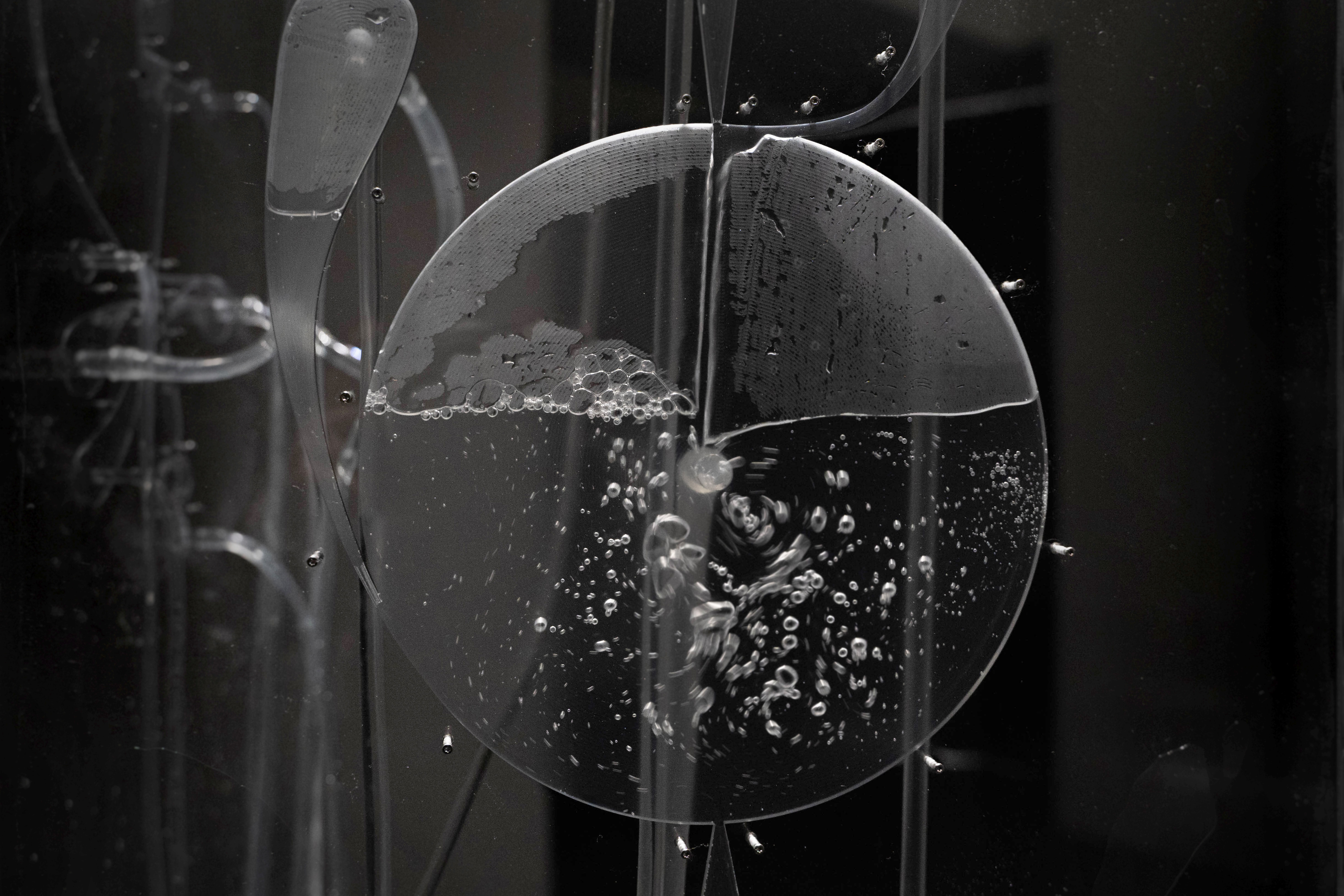

Fluidic Logic Gates and circuits, Deltaic fragments and diagrams of the ongoing research project, Danubian Filaments, intertwine into a research compendium. The project reimagines the anatomy of computers as fluidic morphologies, attuned to slower rhythms guided by water flows. It explores how these alternative hardware forms can reshape computational models to map entangled systems such as wetlands, where hydrologic histories and human interventions converge. The research boxes document the beginning of this inquiry, turning fluidic shapes into toolkits for drawing cartographic computers.
Fluidics, also known as fluid logic, is a research field established in the 1950s that uses fluid jets to perform operations similar to those achieved through electronics. In fluidics, form follows function; curved, intricate cavities become switches that can perform logic or analogue operations. These shapes, characterised by their organic curves and curvaceous morphologies, seem antithetical to modern hardware. In a time where speed became key, fluidics lost itself in history. Focusing on fluidics as an obsolete yet resilient technology, the project repositions these liquid machines as tools for understanding the complex behaviours of natural systems such as the Danube Delta.
On view in the exhibition "From the Ashes of the Burnout Machines" at Galerie MAERZ.
Photo credit: Detail Vortex - courtesy of the artist, Fluid Anatomy, 2025
Part of ''Danubian Filaments'' supported through S+T+ARTS AQUA MOTION.
"S+T+ARTS AQUA MOTION is co-funded by the European Union under the STARTS – Science, Technology and Arts initiative of DG CNECT (Agreement Number LC-03568055). Views and opinions expressed are, however, those of the author(s) only and do not necessarily reflect those of the European Union or DG CNECT. Neither the European Union nor the granting authority can be held responsible for them."