A Tale of Two Datacenter
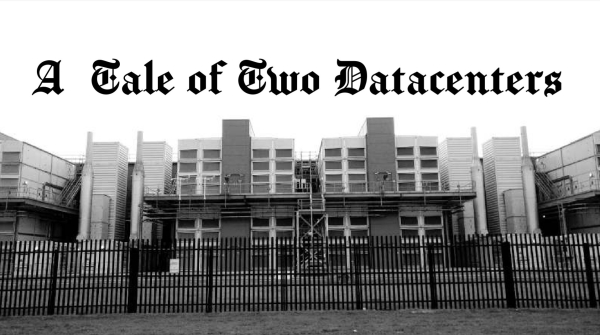
A Tale of Two Datacenters recounts the arrival of two hyperscale data centers in the North of the Netherlands.
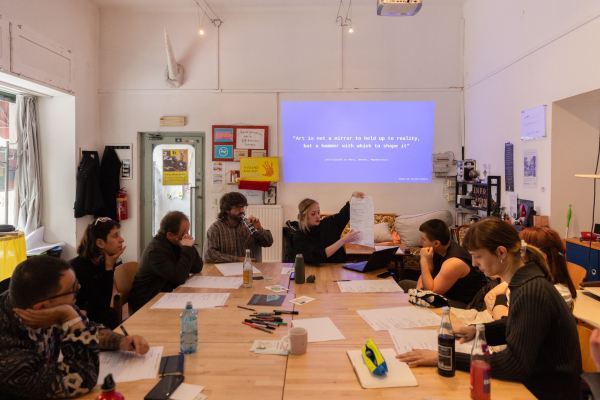
A session of lectures and presentations about the current uncontrolled rise of data centres across the globe. Impact on the environment, current project explorations, local examples like Kronstorf, but also in the Netherlands. We'll also discuss current resistance modes against datacenter construction, how to oppose such projects, learn from other experiences, and plan to be effective at scale.
The critical infrastructure lab promotes principles for the good governance and proper design of infrastructures.
When computers were introduced in the mid to late 20th Century, they were often described as a new, clean form of industry.
‘Cloud Factories’ is an ongoing research project that investigates the growing entanglement of our professional and social lives with the ‘Cloud’ and the material, environmental and socio-
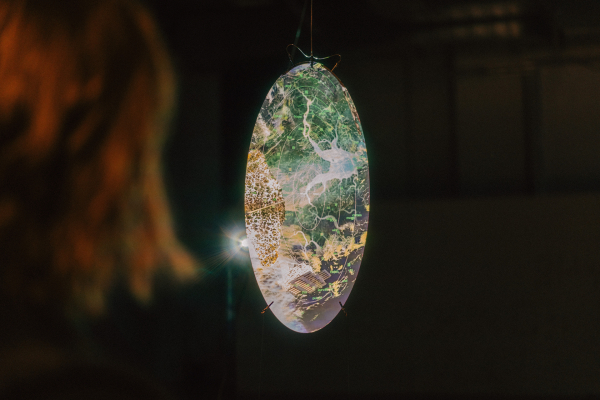
Two immersive installations by jiawen uffline and by Maja Bojanić and Brin Žvan from Ljudmila Art and Science Laboratory blur nature's irrational forces with institutional critique and artivism. Both works invite visitors to participate in order to activate them. The exhibition explores ideas of communication and sustainability and creates a parallel realm where visitors gain agency.
Eleven international artistic positions address the ecological and social impacts of an extractive, profit-driven model of digitalisation, and illuminate the close entanglement of the climate and technology crises. Burnout not only settles in the individual body as a state of exhaustion, but it also accumulates, circulates and disperses into a shared climate that stretches across technical systems, social relations and ecological processes. What happens at the margins of exhaustion, where systems falter or refuse to fully cohere? Could spaces emerge for tentative forms of connection, alternative rhythms and practices that do not reproduce the extractive logic of burnout?
For its 2026 edition, AMRO presents Becoming Unreadable at Splace, a showcase in which participating artists engage with strategies of invisibility, unreadability, and digital self-determination as critical responses to the hyper-visibility enforced by AI systems and the growing alliance between big tech and conservative politics.
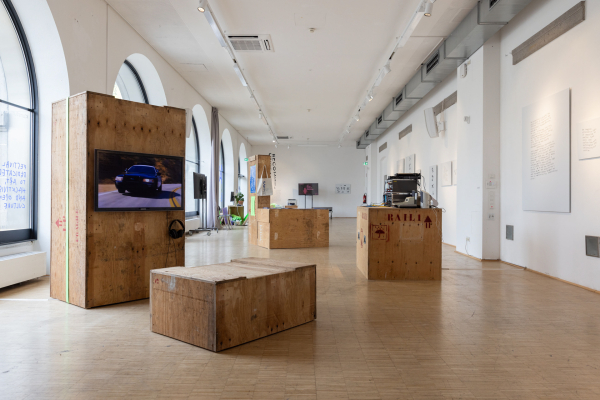
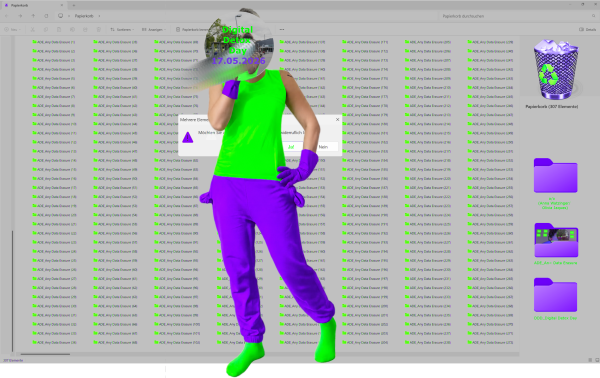
In a durational performance, a/o delete their own data from their digital infrastructure over the course of a working day (8 hours) and welcome everybody to join the session at the temporary office space at splace. We delete old and new data from our computers, phones, hard drives and the cloud. We decide, select and delete all different files - emails, photos, videos, music, texts, messages, long forgotten PDFs and downloads we never looked at - from our digital desktops and above all, we delete more traces like cookies and caches and throw everything in our digital bins.
Self-Hosting for Beginners: We will transform ESP32 microcontrollers into battery-powered servers. Each server establishes and publishes a local website via a captive portal.
Starting from the assumption that, as those privileged with knowledge and experience in technology, we are obliged to share it with people who don’t have such competencies.
We’ll introduce Nudel, the website where Pastagang members like yourself meet to jam.
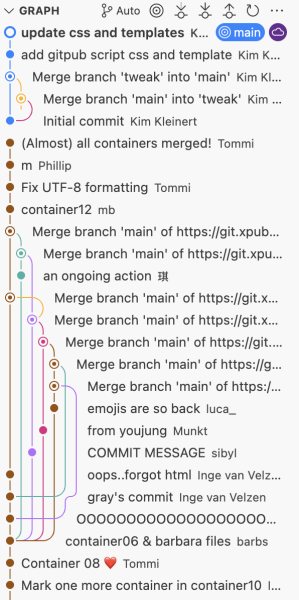
In this workshop, we will explore how we write and are written by software through the example of collaborative version control software as a publishing protocol.
Together, we will try out GitPub, a tool that renders a git repository into a printed or web-based publication, including repository metadata. The workshop will consist of two parts: starting with a collaborative writing exercise in a shared git repository, we will later transform the written text and writing process into a publication.
GitPub builds upon the git software, which means that collaboration and version control produce a vast amount of metadata for the code or text that is written inside a repository.
What's a Watt? is a fun exploration of our energy consumption through a DIY game. Our own consumption of energy is presented through a comparison with a life-sized Tesla car battery. In this particular case, we chose an older model that has the capacity of 75kWh (75000Wh) and contains 4416 lithium battery cells.
Two immersive installations by jiawen uffline and by Maja Bojanić and Brin Žvan from Ljudmila Art and Science Laboratory blur nature's irrational forces with institutional critique and artivism. Both works invite visitors to participate in order to activate them. The exhibition explores ideas of communication and sustainability and creates a parallel realm where visitors gain agency.
Self Sabotage is an artist talk by Sam Lavigne exploring slowness, friction, and intentional malfunction as strategies for resisting extractive computational systems.
868labs invites participants into an exploration of mesh and wearable technologies that imagine communication beyond centralised infrastructures.
Open source projects have long been THE critical dependencies in our digital infrastructure, as xkcd illustrated.
At AMRO 2026, I will introduce a new kind of chatbot: a dead one. yorick.chat is the world’s first dead chatbot.